

Must-Have Golf Gadgets 2026: What's Worth Buying
Table of Contents
- Why 2026 Is a Big Year for Golf Gadgets
- How to Judge a Golf Gadget Before You Buy
- The Best Golf Gadgets 2026 Has to Offer (By Category)
- Must-Have Golf Accessories That Earn Their Place in the Bag
- Golf Gadgets for Beginners: Start Here, Skip the Rest
- Golf Accessories for Women: Fit, Style, and Function
- Ongoing Costs, Durability, and Course Rules to Check First
- Conclusion
- Frequently Asked Questions
Last Updated: October 18, 2026
Why 2026 Is a Big Year for Golf Gadgets
The must have golf gadgets in 2026 share one trait: they solve a small, specific annoyance instead of adding another screen to your round. That shift matters. Golfers have spent a decade buying tech that tracks everything and fixes nothing, and the market has finally noticed.
At Golf Bandz, we make a simple wristband that holds three ball markers, so we pay close attention to which gadgets actually earn bag space and which ones get left in the car by July.
Three forces are driving the change. First, GPS watches and rangefinders have become accurate enough that the difference between models is now usability, not data. Second, launch monitors have dropped into price ranges casual players can justify. Third, and most overlooked, the best-selling gadgets are the cheap ones that remove friction: gloves, towels, tees, and marker holders.
Below, we break down what to buy by category, what to skip, and how to judge a gadget before you spend. The framework we use has kept our own bags lean for years.
How to Judge a Golf Gadget Before You Buy
A golf gadget is worth buying when it removes a repeated annoyance without adding a step to your pre-shot routine. That is the whole test. Everything else is marketing.
Run every candidate through four questions:
- Does it replace something you already carry? If it adds weight without replacing an item, it needs to be genuinely useful.
- Does it work in rain, heat, and low light? Course conditions kill more gadgets than bad reviews do.
- What does it cost to keep? Subscriptions, replacement batteries, and app paywalls change the math.
- Can you use it without reading a manual on the 10th tee? If setup takes longer than a range session, it will not survive a busy Saturday.
The Best Golf Gadgets 2026 Has to Offer (By Category)
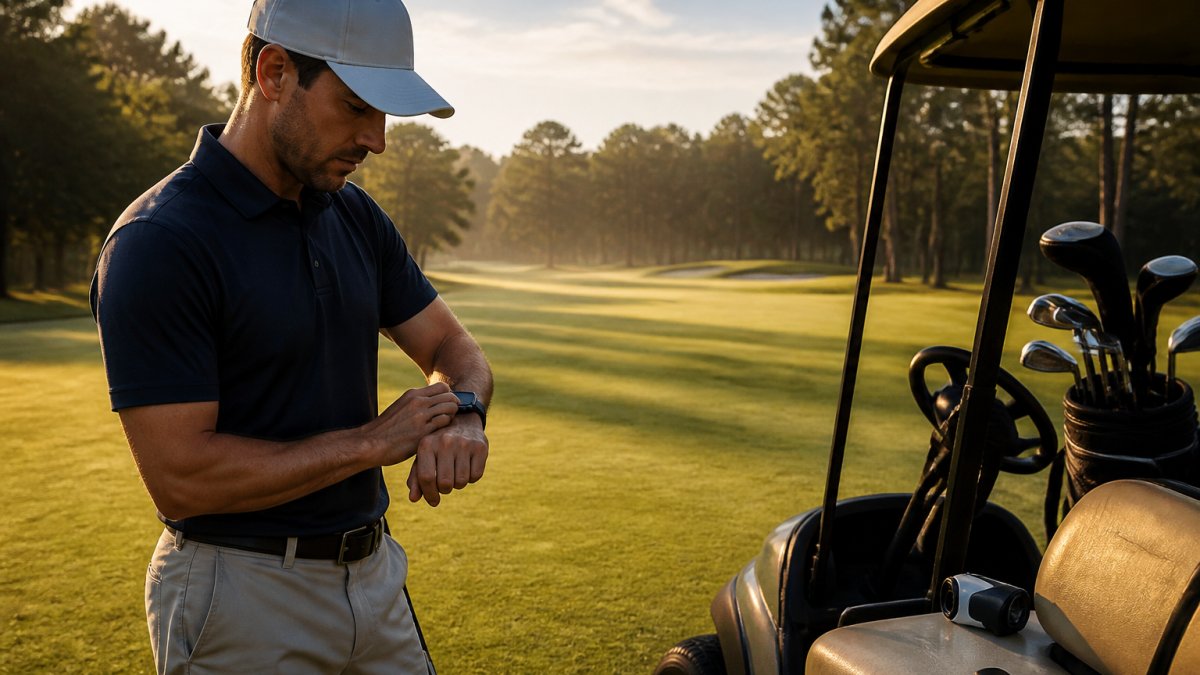
Categories beat brand lists here, because the right pick depends on how you play, not on what is trending. Here is the summary we would give a friend.
| Category | What It Does | Who It Suits | Watch For |
|---|---|---|---|
| GPS watch | Front, middle, back yardages | Walkers, pace-of-play focused | Subscription fees for full course maps |
| Laser rangefinder | Exact pin distance | Players who want precision | Slope mode legality in competition |
| Launch monitor | Ball and club data | Range regulars, practice-focused | Space needed for accurate readings |
| Training aid | Grooves a specific motion | Anyone fixing one flaw | Aids that fight your natural swing |
| Glove, towel, tees | Grip, clean grooves, setup | Every golfer | Cheap gloves that stiffen when wet |
Distance and Navigation: GPS Watches and Rangefinders
A GPS watch gives front, middle, and back distances with no aiming required, which suits walking rounds and fast play. A laser rangefinder gives an exact number to the pin, which suits players who shape shots and want precision.
Pick the watch if you play unfamiliar courses often and want yardage at a glance. Pick the rangefinder if you play the same course and want exact carry numbers. Many regulars eventually carry both, using the watch for layout and the laser for the flag.
Check one thing before buying either: whether full course mapping requires a subscription. That ongoing cost is the detail most buyers miss.
Data and Practice: Launch Monitors and Training Aids
Launch monitors measure ball speed, launch angle, and carry, turning a range session into feedback instead of guesswork. Training aids do the opposite: they constrain your motion so a flaw becomes obvious.
Buy the monitor if you practice weekly and want to know why the ball curves. Buy the aid if you already know the flaw and need reps to fix it.
Small Gear That Saves Shots and Time
The cheapest gadgets save the most strokes, and it is not close. A clean glove and a dry towel protect your grip. A divot tool protects the greens. A ball marker you can reach in one second protects your pace of play.
That last one is where most bags are poorly organized. Digging through a pocket for a marker costs a few seconds every hole, and over eighteen holes it adds up to visible slow play. A wristband that holds markers, like the adjustable silicone band from Golf Bandz with three magnetic slots and 27 interchangeable designs, removes that search entirely. It is a small thing that compounds.
Must-Have Golf Accessories That Earn Their Place in the Bag
Must-have golf accessories are the items you would replace the same day they broke. Everything else is optional.
Our short list:
- Two gloves, rotated so one dries while you play
- A microfiber towel clipped to the bag for club faces
- A divot repair tool with a marker attached
- A rain hood or umbrella if you play in shoulder seasons
- Sunglasses rated for glare, not just style
Notice what is missing: nothing with a battery. The accessories that earn their place are the ones that work when your phone is dead.
Golf Gadgets for Beginners: Start Here, Skip the Rest
Beginners should buy three things and ignore the rest: a glove that fits, a way to mark the ball, and a rangefinder or GPS app for basic yardage. That combination covers most of what a new player actually needs.
Skip the launch monitor for now. Without a repeatable swing, the data describes noise.
Skip the premium training aids too. Most beginners improve faster from lessons and range time than from a device that constrains a motion they have not built yet.
What beginners should prioritize is speed of play. Knowing your yardage, marking your ball quickly, and keeping your glove dry will do more for your enjoyment and your foursome's patience than any tracking device.
Golf Accessories for Women: Fit, Style, and Function
Golf accessories for women fail most often on fit, not function. Gloves sized for a smaller hand, bands that sit comfortably on a narrower wrist, and tees at the right height matter more than colorways.
The good news is that style and function no longer trade off. Interchangeable designs let you match a marker to your mood or your foursome without buying a new accessory, and adjustable bands fit a wider range of wrist sizes than fixed closures.
Look for three things: adjustable fit, water resistance, and a closure that does not rub under a glove. Everything else is preference.
Ongoing Costs, Durability, and Course Rules to Check First
The purchase price is rarely the real cost. Before you buy any golf technology, check three things.
Subscriptions. Many GPS watches and launch monitors charge yearly fees for full features. A device that costs more up front but has no subscription can be cheaper within two seasons.
Durability. Golf gadgets live in heat, rain, and vibration. Water resistance ratings and replaceable batteries matter more than spec sheets suggest. Silicone and stainless hardware survive better than soft plastics.
Course rules. Under the USGA Rules of Golf, rangefinders with slope compensation are not permitted in competition unless the committee allows them, so check local rules before relying on slope mode. Many courses also restrict practice swings with training aids on the tee.
Conclusion
The hardest part of buying golf gadgets is not finding options, it is resisting the ones that add complexity to a game you play for fun. Buy the small gear that removes friction, add technology only when it answers a question you actually have, and check the ongoing costs before you commit.
Golf Bandz was built around exactly that idea: an adjustable, waterproof silicone wristband with three strong magnetic slots and 27 interchangeable marker designs, so your markers are always within reach and your bag stays clutter-free. Golf Bandz is a good place to see how a small accessory can simplify your round.
Start with the essentials, upgrade with intent, and keep your bag light.
Frequently Asked Questions
What golf gadgets are actually useful on the course?
The gadgets that earn a permanent spot are the ones you reach for every hole: a GPS watch or rangefinder for yardage, a launch monitor if you practice regularly, and small accessories like a magnetic ball marker wristband so you stop digging through pockets. Anything that adds a step, needs a subscription you won't use, or stays in the bag after two rounds is not useful, no matter how good the demo looked.
What are the must-have golf accessories for someone just starting out?
Beginners get the most value from a glove that fits properly, a durable towel, a divot tool, and a reliable way to mark the ball. A GPS watch or basic rangefinder helps too once you're playing full rounds. Skip launch monitors and swing-analysis tech until your swing is repeatable, because the data won't mean much yet. Spend the first season on gear that keeps you comfortable and moving, then add tech.
Are golf accessories for women different from men's gear?
Function is the same, but fit and sizing often aren't. Gloves, wristbands, and watches are frequently sized smaller, and adjustable bands solve most fit issues. Color and design options matter to plenty of women golfers who want gear that matches their bag and style. When shopping, check the adjustment range and material rather than assuming a unisex product will fit comfortably.
Do golf gadgets require subscriptions or ongoing costs?
Some do. GPS watches, launch monitors, and shot-tracking systems often include a free tier plus a paid plan for advanced features, so check the renewal price before buying. Simple accessories like ball marker wristbands, towels, and divot tools have no ongoing cost. Add up the subscription over three years and compare it to the hardware price, since that total is the real cost of ownership.